
#TBF26 spotlights data, AI and fragmentation as ticketing’s future is debated

From the ambitions of LA28’s programme through to the needs of independent talent agents – the evolving, complex and increasingly fragmented ticketing landscape came under the microscope at TheTicketingBusiness Forum 2026,
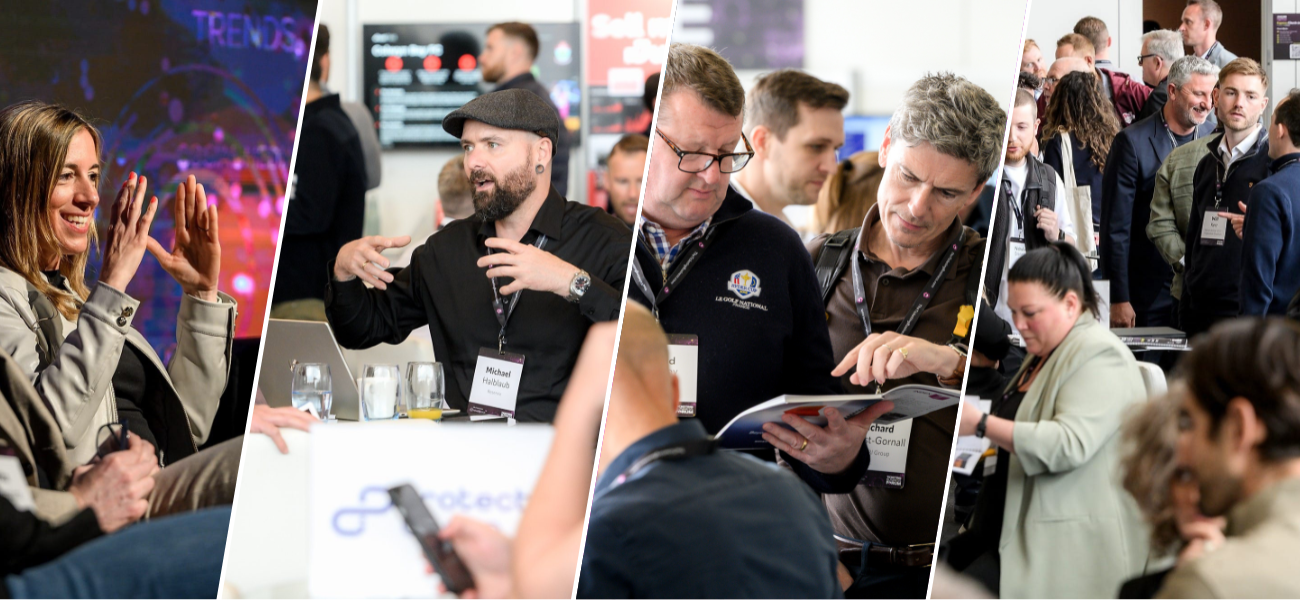
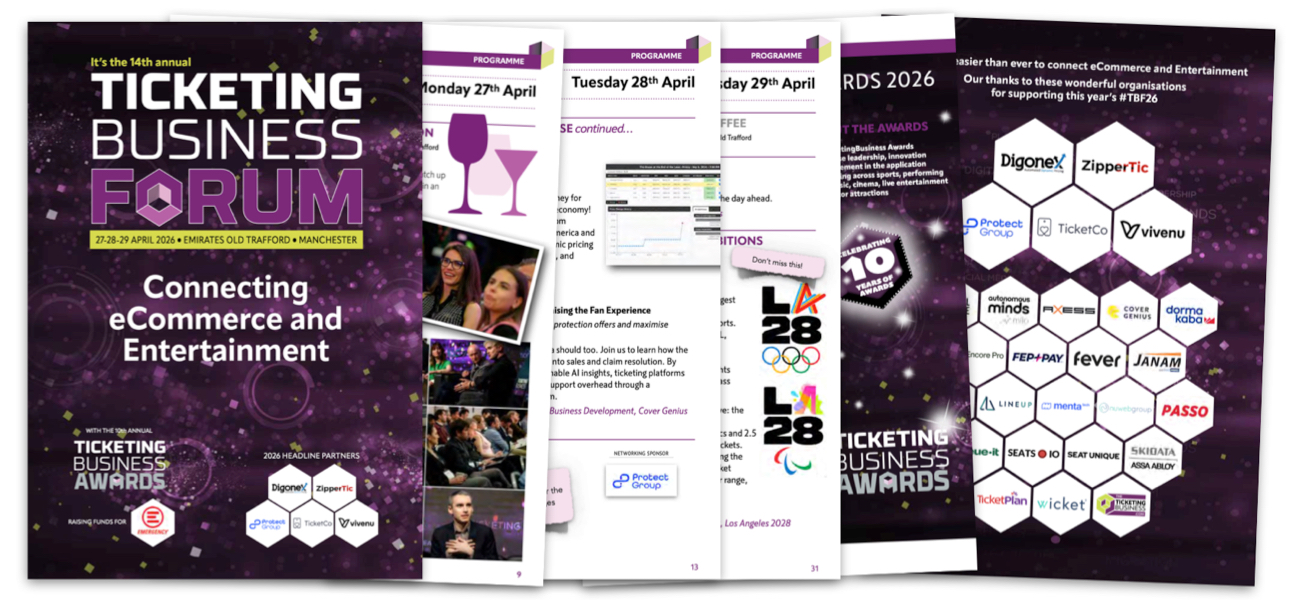
The 14th annual, two-day Forum brought together a global community of industry leaders and expert speakers across a packed programme of debate, discussion and dialogue.
From engaging panel sessions to presentations of the latest cutting-edge solutions, the Forum highlighted the growing role of data and AI-fuelled technologies in enabling live experiences to thrive against a backdrop of regulatory and behavioural changes.
This was underlined strikingly by Aaron Lampkin, vice-president of ticketing for LA28, who explained the critical role of data-driven intelligence in helping to shape the ticketing strategy for the Olympic and Paralympic Games in just over two years’ time.
Lampkin declared at the start of day two that LA28 had benefited from the decision to start the ticketing strategy process early “in order to give us time to learn and potentially repivot, if necessary”, with the aim of selling a Games-record total of 14 million tickets.
On top of the research, the best way to avoid empty venues was to use dynamic pricing and official resale
With the first sales phase having concluded on April 19, LA28 last week set a new benchmark, with more than four million tickets already sold. Clarifying that this figure is now actually 4.4 million, Lampkin outlined how LA28 has focused on the home market.
The organisation “went deep on market studies” across other international competitions and major leagues in the US amid studies “suggesting we could sell out the Games in California alone”.
Lampkin pointed out that LA28 will be the first Games to offer an official resale platform, along with rotating barcodes for tickets. He added: “It was clear that the best way to avoid empty venues was to use dynamic pricing and official resale.”
LA28 will set another first in 2027, with Paralympics tickets going on sale. This will be the first time that the Paralympic Games is given its own ticketing window, with Lampkin stating: “We really see (the Paralympics) as an opportunity.”
Regulation, recognition and resale

Day one of the Forum at Emirates Old Trafford in Manchester was packed with informative and engaging panel sessions. An example of this was ‘True Identity & Fair Play’, which tackled the subject of regulation, recognition and resale by exploring compliance and privacy challenges, as well as the impact on venues, promoters and fans.
Mikael Ungerholm, founder and CEO of ZipperTic, stated how bots are “really the problem on the frontline”. He added: “The problem starts with the primary sale. Take away the bots and you’re left with ethical resale. The onus is on primary sale stakeholders to act.”
The key issue is where to put technology to allow fans to resell tickets legitimately
Juan Pablo Santa Maria, chief revenue officer of menta tech, added: “The key issue is where to put technology to allow fans to resell tickets legitimately. Implementing this in a way to get bots and bad actors out of it is key. The problem is not the offer of resale, but the need to develop a tool in primary so that people aren’t pushed into this.”
Sam Shemtob, director of the Fully-authorised European Alliance for Ticketing (FEAT), pointed out that one actor that “sometimes gets missed” is Google, adding its role, along with that of other search engines, has a “big part to play”. Shemtob said: “Government legislators need to look at the role Google plays in advancing and promoting some listings.”
Lou Champion, director of ticketing at The O2, added that it is vital to remember the impact of unauthorised resale on fans who end up being denied entry with fake tickets.

Earlier on day one, the ‘Challenging Group-Think’ session focused on how to structure, sell and deliver group sales effectively in modern ticketing environments.
Group transactions should drive relationships as well as revenues… You also need to build your future fanbase
Speaking from a group sales for sponsors perspective, Laura Pallarès Bertran, head of ticketing for The iLUKA Collective, said how such transactions can drive relationships as well as revenues. Bertran stressed that the “planning stage is key”. She added: “Some of these companies are many-layered organisations. You must try and educate within the company that you need to plan ahead. There is a need to start working sooner to get to a better place.”
Speaking from a sports club’s perspective, Alistair Spiers, head of commercial at Blackpool FC, said: “Revenue is super important, but you also need to build your future fanbase.” He suggested clubs can do this by offering groups of tickets to local schools, hospitals and other such organisations.
Joining Bertran and Spiers on the panel was UEFA’s head of ticketing Rita Namora, who received the Outstanding Achievement Award at TheTicketingBusiness Awards 2026 (TBA26), and Steve Rimmer, founder and CEO of Tickets for Good.
The connected customer journey

A four-way conversation was also generated on the panel: From ‘Ticket to Turnstile to Till’, which sought to address how a connected customer journey can deliver valuable insights, as well as increasing dwell time and fan expenditure.
Sana Ali Aamir, regional general manager for Northern Europe at #TBA26’s Ticketing Business of the Year, Fever, said – that as a former finance exec coming from outside the sector – she was “surprised” by how different areas of the ticketing journey continue to operate in different silos. She added: “Nobody is looking to connect the dots, and we can unlock lots of value here.”
Ticket prices are going up, but how can we drive value?
Meanwhile, Vicky Cheevers, head of marketing and communications at The Royal International Air Tattoo, spoke of the “single customer view” and added: “A lot of brands – big and small – haven’t achieved that. Ticket prices are going up, but how can we drive value? Through using data of customers.”
Stuart Whittick, head of finance at Allianz Stadium (Twickenham), and Grant Wyatt, sales director of FEP Pay, shared insights into connecting the ‘at-venue’ sales data to build up an enriched customer view that builds on ticket-buyer details and potentially informs operations in real-time.
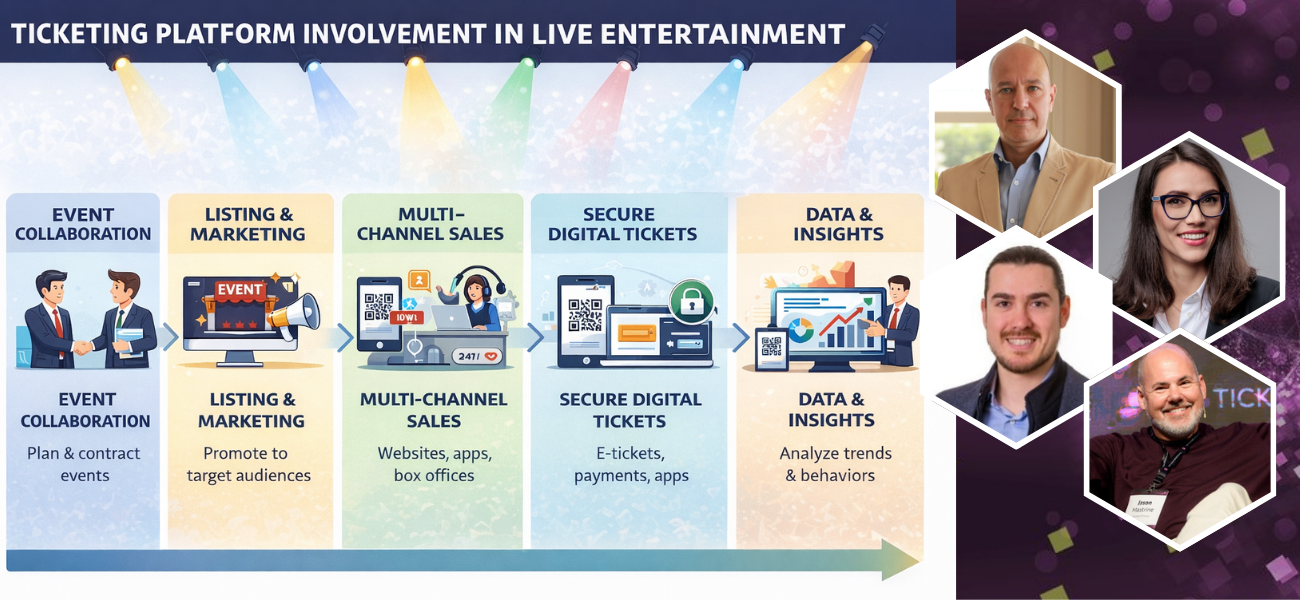
Rounding off the day’s panel sessions, ‘Same, Same… But Different’ brought together Atil Aykar, general manager of PASSO; Eleonora Mihova, CEO of Ticket Station Bulgaria and Jose San Miguel, managing director of NuWeb Group. The panellists engaged in a discussion centred on how three different stakeholders – promoters, ticketing platforms and technology partners – see the same events differently.
Mihova issued the message that good ticketing is “dependent on flexible processes, and this starts from the very beginning when you put an event on sale”. She added: “You need to provide a platform that has no friction, offers security for customers, and is an easy and straightforward experience overall.”
Current risks, and future opportunities

The ‘Opening Perspectives’ session, which kicked off #TBF26 also highlighted data fragmentation as a key issue.
Clare Kenny, chief marketing officer of TicketCo, said in many cases “there is a total lack of integration”. She added: “The average sports club is 15 years behind an average consumer business from this perspective.”
The average sports club is 15 years behind an average consumer business
Simon Weber, co-founder of Vivenu, said that a “change of mindset will happen” and explained: “It’s not only about ownership of data, but we have to get hold of it now.” He added: “There has been a tremendous shift from ticketing strategy being a box-office decision to a boardroom decision. I’m really excited about that shift in strategic direction.”
Also speaking in this session was Daniel Gidney, chief executive of #TBF26 host Lancashire Cricket. Gidney addressed the Forum a day before it was announced he had made the decision to retire at the end of 2026 after 14 years in the role.
Elsewhere, a packed Tuesday schedule threw the spotlight on SailGP, while also making time for a new product launch. In a fireside conversation, SailGP director of fan engagement and event experience Marek Borowik outlined how the series has been going about “redefining” the perception of sailing and is now targeting becoming a top-25 sports property by 2030.
SailGP is currently in the first year of a global ticketing partnership with Fever, with Borowik stating before that there were seven ticketing platforms marketing its events globally. “Moving to this model has been a brilliant step for us, and the data generated through it is critical,” he said. “Fan data is equally important to us as race performance data.”
Making its big reveal on Tuesday, Line-Up, the commerce platform for live entertainment, announced the launch of Reach.
The localisation challenge

Aside from the spotlight shone on LA28, day two’s highlights included a panel on the ‘Wishlists & Practicalities’ of localising entertainment ticketing platforms across Europe’s diverse markets.
Paul Bohunsky, technical product manager of CTS Eventim, stressed that while “localisation starts with translation”, every country has very specific regulations and needs. He added: “Adapting for each country is a long journey, and you have to be able to tailor your offering as aspects such as legislation change.”
With advent of AI – when it comes to product ideas – we’re going to have to learn to say ‘no’ a lot more.
Meanwhile, Anthony Escott-Lawrence, head of product at Nuweb Group, said companies “have to be incredibly adaptive” to operate in different markets. On the role of AI in product development, Escott-Lawrence stated: “With advent of AI we’re going to have to learn to say ‘no’ a lot more. There is a difference between generating an idea using AI and following up in actually developing that product.” The panel also featured additional insights from Sybolt Ettema, head of product at Tymes4.
Elsewhere on Wednesday, Julien Gathy, co-founder of Magma Collective, provided his perspective on the role of independent music agents and promoters in the festivals and live music space. Gathy said that in order to stand out, “you need to create a community and experience that you can’t get at the larger festival”. He added: “We’re all about creating a moment – a Disneyland for adults if you like.”
Looking to Asia, Jon Pallett, head of communications at Hong Kong China Rugby, reflected on 50 years of the iconic Hong Kong Sevens, with the anniversary being marked in style at Kai Tak Stadium a few weeks ago.
Having traditionally employed a three-day ticket and general admission-focused seating model across the stadium, Pallett said local stakeholders are weighing up revamping the three-day ticket model in an effort to better monetise the prime seats in the stadium. “Open seating is something we’ve always had pride in, but it does damage you in that sales window,” he conceded.
With the rise of AI, Knowledge is Everywhere. Wisdom is Rare
#TBF26 wrapped up with TicketCo CEO and co-founder Carl-Erik Michalsen Moberg joining UK Parliament’s director of customer strategy and retail Gabriela Gandolfini, TJChambers Consultancy managing director Tim Chambers and TheTicketingBusiness CEO Ian Nuttall for reflections on the Forum’s major talking points – and expectations for the future.
As Chambers pointed out, the industry is undergoing “consolidation as well as fragmentation”, with the ecosystem surrounding ticketing set to expand.